

The DWP is restarting disability benefit reassessments for many claimants by resuming the transfer of certain adults from Disability Living Allowance to Personal Independence Payment.
However, the change does not mean all disability-benefit recipients—or all 153,000 remaining adult DLA claimants, will be reassessed immediately.
From September 2026, the Department for Work and Pensions plans to test the process on 3,000 cases randomly selected by postcode across England and Wales. The findings will be used to decide what support is needed before any wider rollout.
Key Takeaways:
- Around 153,000 adult DLA claimants remain within scope for transfer.
- The first phase will involve 3,000 randomly selected cases.
- The test is expected to begin in September 2026.
- Claimants do not need to apply until an official invitation arrives.
- Ignoring an invitation could eventually cause DLA payments to stop.
- Existing PIP claimants are not being reviewed through this specific programme.
The immediate development is therefore a limited restart of DLA-to-PIP transfers, not a blanket reassessment of everyone receiving disability support.
Why Is The DWP Restarting Disability Benefit Reassessments?

PIP began replacing DLA for working-age adults in 2013. New adult DLA claims generally closed, although DLA continued for children and for adults whose existing awards had not yet been transferred.
DWP-initiated transfers were paused in 2020 because of the Covid-19 pandemic. Since then, reassessments have generally occurred when a claimant reached 16, reported a relevant change, volunteered to claim PIP or reached the end of a fixed-term DLA award.
Reasons For The Limited Restart
- The department needs to test staff and assessment capacity.
- Claimant communications and accessibility support need monitoring.
- The financial and operational effects must be measured.
- Problems can be identified before substantially more people are contacted.
- Additional safeguards may be introduced following the test.
The controlled phase does not itself determine when all remaining adult DLA claims will be transferred.
Which Disability Benefit Claimants Could Be Affected?
The announcement primarily affects adult DLA claimants in England and Wales who remain within the group originally intended to move to PIP. Many are understood to have indefinite or so-called lifetime awards because their conditions were not expected to improve.
Groups Covered By The Announcement
| Claimant Group | Position Under The Restart |
| Selected adult DLA claimants | Around 3,000 may be included from September 2026 |
| Other remaining adult DLA claimants | Approximately 150,000 could be contacted later |
| Existing PIP recipients | Not included in this specific transfer exercise |
| Children receiving DLA | Child DLA remains available |
| Claimants living in Scotland | Covered by separate devolved arrangements |
| Claimants in Northern Ireland | Covered by a separate benefits administration |
An indefinite award does not guarantee exemption because the claimant will be assessed under PIP legislation rather than the rules used for the original DLA decision.
The figure of 153,000 represents claimants remaining within scope. It is not an estimate of how many will lose entitlement.
How Will The First 3,000 DLA Cases Be Selected?

The first phase is intended to provide a representative but manageable test of the transfer process. It should not be interpreted as a targeted investigation of particular disabilities or award levels.
How Will Postcode Selection Work?
DWP has said cases will be selected randomly by postcode across England and Wales. The publicly available information does not identify particular towns, postcode districts, medical conditions or age groups that will be prioritised.
Why DWP Is Starting Small?
A 3,000-case sample allows the department to examine how claimants respond, whether additional support is required and whether assessment providers have sufficient capacity.
It should also expose problems involving inaccessible letters, missed deadlines, reasonable adjustments or difficulties obtaining evidence before a broader restart.
Official Position
“We are reviewing a random sample of 3,000 cases, and the findings will help determine any additional support needed when active transfer resumes.”
The statement confirms that the test is intended to inform the process rather than serve as an immediate national rollout.
What Has Not Been Confirmed?
No complete list of selected postcodes has been published. DWP has also not confirmed precisely when the first letters will arrive, how long the test will run or when every remaining adult claimant could be invited.
Those gaps mean claimants should respond to individual correspondence rather than assume they are included because of their location or condition.
What Will Happen When A DWP Reassessment Letter Arrives?
An invitation letter will explain how and when the claimant must begin a PIP claim. Current adult DLA claim rules state that an invited claimant normally has 28 days to apply.
Steps After Receiving A Letter
- Check the claimant’s name, National Insurance details and response deadline.
- Use the contact method specified in the invitation.
- Ask for extra time promptly if the deadline cannot be met.
- Explain any communication, accessibility or reasonable-adjustment needs.
- Complete the disability form with details of daily living and mobility difficulties.
- Send relevant evidence already available.
- Keep copies of forms, letters and supporting documents.
Claimants may provide care plans, repeat prescription lists, clinic letters or evidence from professionals who understand how the condition affects everyday activities. A diagnosis alone may not show the level of functional difficulty required under PIP rules.
DLA usually continues while a valid PIP claim is considered and for at least 28 days after the PIP decision. Ignoring the invitation, however, can lead to suspension and eventual termination of the DLA claim.
DLA To PIP Reassessment Next-Step Checker
Answer a few questions to identify the most appropriate next steps if you may be affected by the restart of adult DLA-to-PIP transfers.
Question 1
Where does the claimant currently live?
The announced 3,000-case test applies to England and Wales.
Question 2
Has an official DLA-to-PIP invitation arrived?
Claimants should not start this transfer process solely because they have heard about the reassessment programme.
Question 3
What is the position with the response deadline?
An invited claimant normally has 28 days to begin the PIP claim, but the exact date printed on the letter should be followed.
Question 4
Does the claimant need additional support?
This may include help communicating, completing forms, gathering evidence or participating in an assessment.
Suggested next steps
What the claimant should do next
Evidence that may be useful
- Care plans or treatment information.
- Clinic, hospital or specialist letters.
- Repeat prescription lists.
- Information from professionals familiar with the claimant’s needs.
- Practical examples of difficulties on good, bad and typical days.
This checker provides general information only. The claimant should follow the instructions and dates shown in their official correspondence and seek independent welfare-rights support where necessary.
How Does A DLA-To-PIP Reassessment Work?

Moving from DLA to PIP is not simply a change of benefit name. PIP uses different activities, descriptors and points to measure how a disability or health condition affects independence.
Starting The PIP Claim
The initial claim records personal, banking, healthcare and contact information. The claimant will then receive a form asking how the condition affects daily life and mobility.
The form should explain what happens on good, bad and typical days. Difficulties should be described in practical terms, including the help, prompting, supervision or equipment required.
How Is PIP Eligibility Assessed?
PIP examines 10 daily-living activities and two mobility activities. A claimant normally needs eight to 11 points for a standard-rate component and at least 12 points for an enhanced-rate component.
Activities should be considered according to whether they can be completed:
- Safely.
- To an acceptable standard.
- Repeatedly when reasonably required.
- Within a reasonable period.
- Without help, prompting, supervision or an aid where the relevant descriptor requires independence.
This framework means the medical diagnosis is important context but does not automatically establish entitlement.
Assessment Formats And Adjustments
A decision may be possible from written evidence alone. Where more information is required, the claimant may have a telephone, video or face-to-face assessment, and a face-to-face appointment may sometimes take place at home.
Claimants may request reasonable adjustments or ask for a different assessment channel. Another person can usually attend or join the call to provide support.
Could A Claimant’s DLA Payment Stop Or Change?
Receiving a transfer invitation does not immediately end DLA. Payments normally continue while the claimant follows the process, but entitlement can change when the PIP decision takes effect.
Possible Financial Outcomes
| PIP Decision | Possible Effect |
| Higher combined entitlement | Weekly support may increase |
| Broadly equivalent entitlement | Payment may remain similar |
| Lower component or rate | Weekly support may decrease |
| No PIP award | DLA will end after the applicable transition period |
| Invitation ignored | DLA may be suspended and eventually terminated |
For 2026/27, the current PIP payment rates range from £30.30 a week for standard mobility to a maximum combined award of £194.60 a week. PIP is tax-free and is not reduced because of income or savings.
Someone receiving the highest DLA care and mobility rates cannot receive more than the current £194.60 PIP maximum because the highest combined weekly totals are the same.
However, identical maximum rates do not mean the claimant will automatically receive equivalent components under the different PIP test.
A reduced mobility award can also affect access to a Motability vehicle, while changes to PIP may influence linked support such as Carer’s Allowance or a Blue Badge.
Are Lifetime Or Indefinite DLA Awards Exempt From Review?

An indefinite or lifetime DLA award means the original decision did not include a fixed end date. It did not guarantee that the claimant would remain permanently outside future benefit reforms.
PIP considers functional needs using a separate points-based system. A permanent condition may therefore still require a new explanation of how it affects preparing food, washing, dressing, communicating, managing treatment, mixing with others, planning journeys or moving around.
This has generated concern because many affected people have lived with the same condition for years. The official interim PIP review reported that people had described reassessment as repeated entry into an uncertain and demanding process.
What The Official Review Said?
“Too many people describe the process as ‘dehumanising’, and this must be addressed.”
The review also recorded the words “soul destroying” and “degrading”, while noting that approximately 5% of responses described a positive assessment experience. Its final recommendations are expected in autumn 2026.
What Can Claimants Do If They Disagree With The PIP Decision?
A claimant who believes a PIP decision is wrong should act within the deadlines on the decision letter. The challenge should focus on the activities, descriptors and evidence rather than simply stating that the result is unfair.
Checking The Decision
The claimant should compare the points awarded with the difficulties described in the form and assessment. They can ask for an explanation and identify factual errors, missing evidence or activities that were not considered correctly.
How Does Mandatory Reconsideration Work?
A mandatory reconsideration asks a different decision-maker to examine the claim again. The mandatory reconsideration time limits normally require the request within one month of the date on the decision letter.
The request should explain which descriptors apply, why they apply and what evidence supports that position. A late request may be accepted when there is a good reason, but claimants should not assume an extension will be granted.
Appealing To An Independent Tribunal
If the mandatory reconsideration does not resolve the dispute, the claimant can normally appeal to the Social Security and Child Support Tribunal. The tribunal is independent of government, and an appeal is usually required within one month of the mandatory reconsideration notice.
Independent welfare-rights assistance may help a claimant identify the relevant descriptors and organise supporting evidence.
What Happens After The September 2026 Reassessment Test?
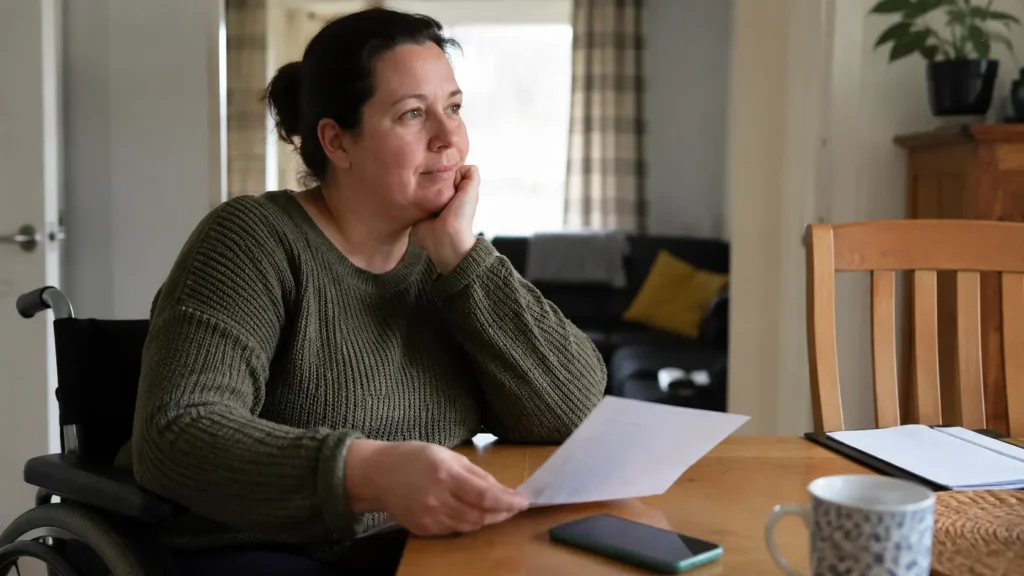
The 3,000 cases will be used to examine claimant experiences, administrative performance and financial effects before DWP decides how active transfers should resume.
Issues The Test Is Expected To Examine
- Whether invitation letters are clear and accessible.
- How many claimants need additional help.
- Whether processing and assessment capacity is sufficient.
- How long each stage takes.
- Whether safeguards are needed for vulnerable claimants.
- What financial effects arise from different PIP outcomes.
- Whether the wider rollout should be changed or delayed.
The separate Timms Review is examining more fundamental concerns about the design and delivery of PIP. Its interim report says the final recommendations must remain within spending projections and recognises that PIP decisions can affect access to other benefits and services.
Until DWP publishes a wider timetable, the 153,000 claimants should not assume they will all receive letters at once.
Conclusion
The DWP is restarting disability benefit reassessments for many claimants, but the September 2026 phase is limited to 3,000 randomly selected adult DLA cases in England and Wales.
Approximately 153,000 claimants remain within scope for an eventual move to PIP. Anyone contacted should read the invitation carefully, begin the claim within the stated deadline and provide evidence explaining how their condition affects daily living and mobility.
Receiving a letter does not automatically mean a loss of benefit, but failing to respond can place the existing DLA award at risk. The pace and form of any wider rollout will depend on the results of the initial test.
Frequently Asked Questions
Can A Family Member Respond For A Claimant?
A relative may help complete forms and attend an assessment without becoming a formal appointee. An appointee may be required when the claimant cannot manage the benefit claim themselves.
What Evidence Should Accompany A PIP Application?
Useful evidence may include care plans, clinic letters, repeat prescription lists and information from professionals familiar with the claimant’s needs. Evidence should explain functional difficulties rather than only confirming a diagnosis.
Can More Time Be Requested For The PIP Form?
A claimant who cannot meet a deadline should contact the department as early as possible and explain why additional time is needed. An extension should be agreed rather than assumed.
Will A Motability Vehicle Be Affected?
Continued eligibility normally depends on receiving the enhanced PIP mobility component. A lower mobility award or no mobility award can therefore affect an existing vehicle arrangement.
Does A Diagnosis Automatically Qualify Someone For PIP?
No, PIP is awarded according to the functional impact of a condition on specified daily-living and mobility activities. Two people with the same diagnosis may receive different decisions because their practical needs differ.
Can A Claimant Record A PIP Assessment?
Telephone and face-to-face health assessments have been audio-recorded automatically since 29 June 2026 unless the claimant opts out. Video assessments are not currently included in the standard recording arrangement.
Does The Announcement Apply Across The Whole UK?
The 3,000-case test applies to England and Wales. Scotland operates devolved disability payments, while Northern Ireland administers its own PIP arrangements.
Note: The figure of 153,000 describes adult DLA claimants remaining within scope for transfer; it does not represent confirmed benefit losses. The first announced stage covers 3,000 randomly selected cases, and the timetable for a wider rollout remains unconfirmed.