

Ocado has reportedly stopped pursuing a £190.7 million payment from Marks & Spencer, bringing a long-running disagreement over their Ocado Retail joint venture to an apparent close.
The payment formed the final performance-related part of M&S’s acquisition of a 50% stake in Ocado Retail. It was not automatically payable because the joint venture failed to reach the specified financial target.
Ocado had argued that certain decisions and actions should be considered when assessing whether the target had effectively been met, while M&S maintained that no additional payment was due.
Reports published on now said the companies had drawn a line under the dispute without M&S making the final payment.
Neither company’s quoted statement explicitly described the outcome as a formal legal settlement, so it is most accurate to treat the end of Ocado’s pursuit as a reported development rather than a separately announced stock market settlement.
Ocado and M&S Payout Dispute at a Glance
| Key point | Confirmed or reported detail |
| Joint venture | Ocado Retail, owned equally by Ocado Group and Marks & Spencer |
| Agreement completed | August 2019 |
| M&S ownership | 50% |
| Initial payment | Approximately £562 million |
| Potential final payment | £190.7 million |
| Maximum transaction value | Approximately £750 million |
| Payment condition | Ocado Retail meeting an agreed performance target |
| Target period | Ocado Retail’s 2022/23 financial year |
| M&S accounting position | The payment liability was valued at zero |
| Ocado’s previous position | It believed adjustments should be made and warned that legal action was possible |
| Latest reported outcome | Ocado has stopped pursuing the payment and no final sum will be paid |
| Ownership impact | No reported change to the companies’ 50:50 interests |
Primary company source: Ocado Group’s 2026 half-year results show that Ocado Retail revenue increased by 15%, adjusted EBITDA reached £73 million and adjusted earnings before tax improved to a positive £12 million.
Why Did Marks & Spencer Owe Ocado £190.7 Million?

The disputed amount dated back to the formation of the Ocado Retail partnership.
In 2019, M&S acquired half of Ocado Retail, giving the retailer an established way to sell its food products online. The agreement created a 50:50 joint venture combining M&S’s food range with Ocado online grocery platform, fulfilment infrastructure and delivery operations.
M&S agreed to pay up to approximately £750 million for its stake.
This was divided into:
- An upfront payment of about £562 million
- A further £190.7 million linked to Ocado Retail’s performance
- A condition requiring the joint venture to reach an agreed financial target
The final payment was therefore contingent consideration rather than an unconditional debt. In simple terms, M&S would only be required to pay it automatically if the relevant performance condition was satisfied.
The exact earnings target was not publicly disclosed.
Why Was the Final Payment Not Made?
Ocado Retail’s actual performance in its 2022/23 financial year fell below the threshold required to trigger the payment automatically.
Ocado acknowledged that the recorded result was below the agreed target. However, it argued that significant decisions and actions taken within Ocado Retail affected the result and should lead to an adjustment when the payment calculation was made.
M&S took a different view. Chief executive Stuart Machin said in 2024 that the performance test was binary and that the required earnings level had not been achieved. M&S consequently continued to record the accounting value of the payment at zero.
This difference in interpretation became the central issue in the Ocado Marks Spencer payout dispute.
Did Ocado Threaten Legal Action Against M&S?
Ocado previously made clear that it was prepared to use formal measures to obtain a payment.
The company argued that adjustments allowed under the joint venture agreement could result in a substantial amount becoming payable. Ocado also raised the possibility of formal legal proceedings if negotiations did not produce an acceptable outcome.
At the time, Ocado chief executive Tim Steiner expressed confidence in the company’s position. M&S remained equally firm that the automatic performance condition had not been met.
Despite the disagreement, both companies repeatedly said that the dispute was not preventing the everyday operation of Ocado Retail. M&S said in 2024 that the businesses continued to work well together, even while their interpretations of the payment terms differed.
Has the £190m Ocado and M&S Dispute Officially Ended?

Business reports published on 28 July 2026 said Ocado had abandoned its pursuit of the £190.7 million payment and that no final payment would be made by Marks & Spencer.
However, there is an important distinction between the media reporting and the companies’ public comments.
The statements supplied by Ocado and M&S focused on their continuing relationship and the future of Ocado Retail. They did not provide detailed settlement terms or explicitly announce that a legal claim had been formally waived.
Ocado said its priority was to build on Ocado Retail’s improved financial and operational performance. M&S said discussions with Ocado remained positive and that the businesses were working together to realise the partnership’s potential.
Based on the available information:
- No £190.7 million final payment is expected
- Ocado is reportedly no longer pursuing the claim
- No separate cash settlement has been reported
- No change to the 50:50 joint venture ownership has been announced
- Commercial discussions between the two partners are continuing
What Does the Decision Mean for Ocado Retail?
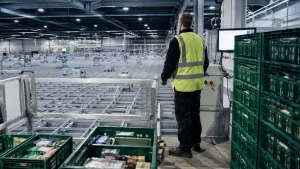
Ending the payment dispute could remove a source of tension between the two shareholders, but it does not resolve every strategic question surrounding the partnership.
Reports indicate that M&S wants improvements to the commercial and technical terms governing Ocado Retail before committing to additional warehouse capacity or higher volumes.
Areas reportedly under discussion include operating efficiency, technology systems and the way capacity costs are charged.
M&S’s official description of the partnership continues to identify customer growth, quality, value and service as its long-term priorities. The company says Ocado Retail’s capacity has increased by more than 50% since the original investment.
The reported end of the payout dispute may therefore allow both sides to concentrate on questions such as:
- How quickly Ocado Retail should expand its order capacity
- Whether existing fulfilment centres can operate more efficiently
- How future investment costs should be divided
- Which technical improvements are required
- How the joint venture can maintain profitable growth
Is Ocado Retail Now Profitable?
Ocado Retail’s recent results show a significant improvement.
For the first half of Ocado Group’s 2026 financial year, Ocado Retail reported:
- Revenue growth of 15%
- Adjusted EBITDA of £73 million, up from £33 million
- Adjusted earnings before tax of £12 million
- Order growth of 13%
- An adjusted EBITDA margin of 5%, excluding specified Hatfield fees
Ocado Group described the retail operation as profitable across its main performance measures.
The £12 million figure is adjusted earnings before tax rather than the same measure as statutory pre-tax profit. Readers should therefore avoid treating every reported profit figure as directly interchangeable.
What Does the Dispute Mean for Ocado Group?

The absence of a £190.7 million payment removes a potentially significant cash receipt that Ocado had once expected or hoped to secure.
Nevertheless, the payment was disputed and conditional, so it should not be viewed in the same way as ordinary trading revenue or a guaranteed receivable.
Ocado Group is currently focusing on:
- Reducing its cost base
- Improving cash generation
- Signing new technology customers
- Growing volumes across its international fulfilment network
- Strengthening Ocado Retail’s profitability
In its 2026 half-year results, Ocado reported £1.1 billion of liquidity and said it expected to achieve positive cash flow during the second half of the financial year, excluding certain closure effects and based on its stated alternative performance measures.
The group has also faced disruption after North American partners Kroger and Sobeys announced the closure of some automated fulfilment operations.
This has increased pressure on Ocado to demonstrate that its warehouse technology can attract new customers and generate sustainable returns.
Is Tim Steiner Leaving Ocado?

Tim Steiner is expected to remain chief executive until the start of Ocado’s 2028 financial year, which begins in December 2027.
Ocado plans to have a successor in place by that point. Steiner is then expected to remain with the company through 2029 in a founder role, supporting the leadership transition and providing strategic guidance.
The succession process is separate from the Marks & Spencer payment dispute, although both developments form part of a wider period of strategic change for Ocado.
Final Takeaway
The Ocado Marks Spencer payout dispute appears to have ended without M&S paying the contested £190.7 million.
The disagreement arose because Ocado Retail did not meet the stated performance threshold for an automatic payment. Ocado believed contractual adjustments could still make a substantial amount payable, while M&S maintained that the target was not achieved and no liability existed.
Although reports say Ocado has now stopped pursuing the money, the companies have not published detailed settlement terms. Their public comments instead emphasise cooperation, improving Ocado Retail’s operations and building on its recent return to adjusted profitability.
For both businesses, the more important question may now be whether they can agree on the investment, technology and commercial terms needed to turn their online grocery partnership into a consistently profitable long-term operation.
Frequently Asked Questions
Why did Ocado want £190 million from Marks & Spencer?
Ocado argued that it was entitled to some or all of a £190.7 million performance-related payment connected to M&S’s acquisition of a 50% interest in Ocado Retail.
Why did M&S refuse to make the payment?
M&S said the agreed earnings target had not been reached. It regarded the performance test as binary and recorded the payment liability at zero.
Did Ocado sue Marks & Spencer?
Ocado warned that formal legal proceedings were possible, but the latest reports say the company has stopped pursuing the payment. No concluded court judgment over the £190.7 million claim has been reported.
Has M&S paid Ocado a smaller settlement?
No separate settlement payment has been publicly reported. Current reporting indicates that the dispute ended without M&S making the final payment.
Who owns Ocado Retail?
Ocado Retail remains a joint venture between Ocado Group and Marks & Spencer, with each company holding a 50% interest.
Is Ocado Retail the same company as Ocado Group?
No. Ocado Retail operates the UK online grocery business, while Ocado Group also develops and licenses automated fulfilment and ecommerce technology to retail partners.
Will the dispute affect Ocado customers?
No immediate customer-facing change has been announced. Ocado and M&S say they remain focused on improving capacity, growth and the overall performance of the retail partnership.